
Footers & Loudspeakers
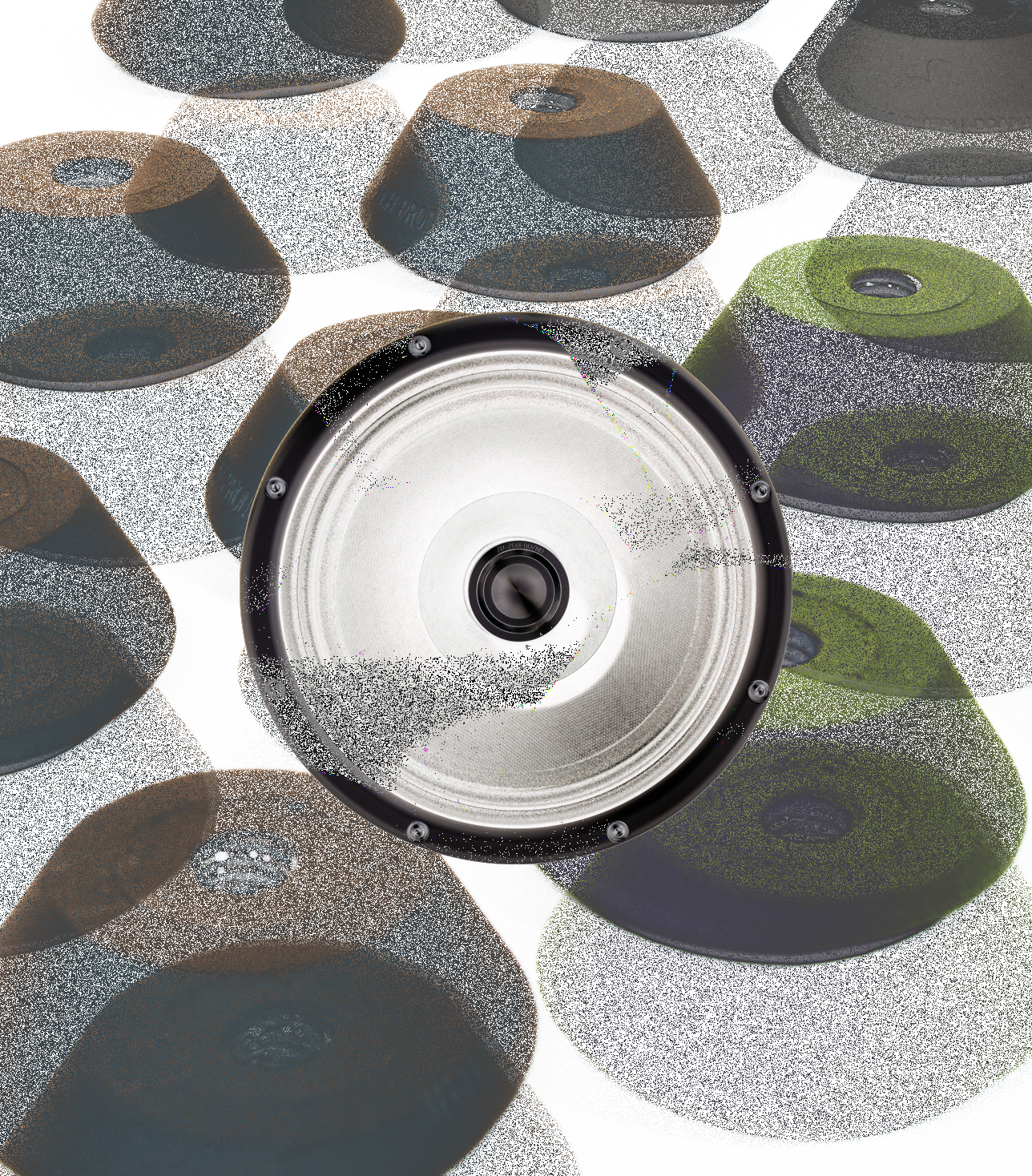
Back in ‘80s and ‘90s, most everyone in high fidelity playback needed “mechanical diodes” for their speakers. Huh? Exactly. They were speaking about highly polished, bathed in divine light, simple cones and spikes. Somewhere along the hi-fi timeline someone noticed that speaker spikes look similar to the electrical diode symbol, and with a wide-eyed marketing glow about them decided, that’s the story to tell (never mind reality). Fidelity chasers took the hucksters and engineers-that-never-were at face value and got busy experimenting with the overpriced cones and spikes. Sure, they made a difference on the sound, but nearly everything that goes between a loudspeaker’s base and the floor does. The dynamics of the seemingly simple loudspeaker/floor interface is actually quite complex (like most everything). We hi-fi freaks like chasing our tone and footers and the like are an easy and inexpensive way we can shape our sound. Here are a few points to consider.
How your loudspeaker(s) contact the floor, and how your floor interacts with your loudspeaker(s) influence tone.
The damping and spring profiles of your loudspeaker/footer/floor system also influence tone.
While these two points are quite different, there is overlap in all but the extreme ends of this spectrum. On one hand your loudspeaker is mechanically fastened with screws and epoxy to your floor. On the other the loudspeaker is floating on a vectored mag-lev system having only air-born contact. And yes, your floor is connected to your room, which is part of the larger equation, but we are stopping at the floor.
“COUPLING”
Spikes couple loudspeaker and floor by cutting through the rug or carpet making an effective mechanical bond. Since virtually all hi-fi speakers are grossly in efficient—even ones that are “efficient”—the difference in sound from changing the speaker/floor interface is typically pretty big. The coupling of floor and loudspeaker can improve system efficiency, particularly in the bass region, but not always. The flip side, anyone with an adjoining room or apartment is likely going to hate you. Note, and this next sentence is doing a lot of lifting, in most cases spiking your loudspeaker does not give more mass for your speaker’s moving membrane to work against, it’s usually less than if your loudspeaker was hovering via that vectored mag-lev system or idealized rubber-type interface.
“FLOATING”
Using rubber footers reduces the coupling of loudspeaker and floor, and the better the engineering of the rubber and part profile the more effective it is. Moving away from coupling and toward floating of the loudspeaker generally increases the loudspeaker’s effective mass and lowers its fundamental resonance. Also, a significant amount of energy that would otherwise be injected into the floor now hangs in the cabinet. Rubber footers also reduce some cabinet noise through motion and heat conversion damping—how much and to what effect depends on the loudspeaker and the footer system. Again, since high fidelity loudspeaker tech is nowhere near real high efficiency, rubber footers make a pretty big impact on tone—and they make neighbors, particularly those living below the loudspeaker, more agreeable to your existence.
Yes, plinths and blocks and rollers and combinations of coupling and floating and constraint increases your options to shape your tone. We don’t all have the same favorite song, band, venue… but we do generally know when a system is dialed and singing. Experiment, try stuff, stuff you have in your garage, pantry, bottom (or top) drawer. Cork is fun, felt too, thick and thin plinth, layers, rubber of all types… hell, keep on keeping on and soon enough you will have fluid damping, coil springs and active dynamics in your footer mine tailings.
Old man Bose was a freak about vehicle suspension tech, and way ahead of his time. Your suprised? (You might have know.) You shouldn’t be once you realize that half the battle (nearly) in good loudspeaker performance comes down to spring force and damping.
-Sean