
Speaker Loading Resistors. What Are They & What Do They Do?
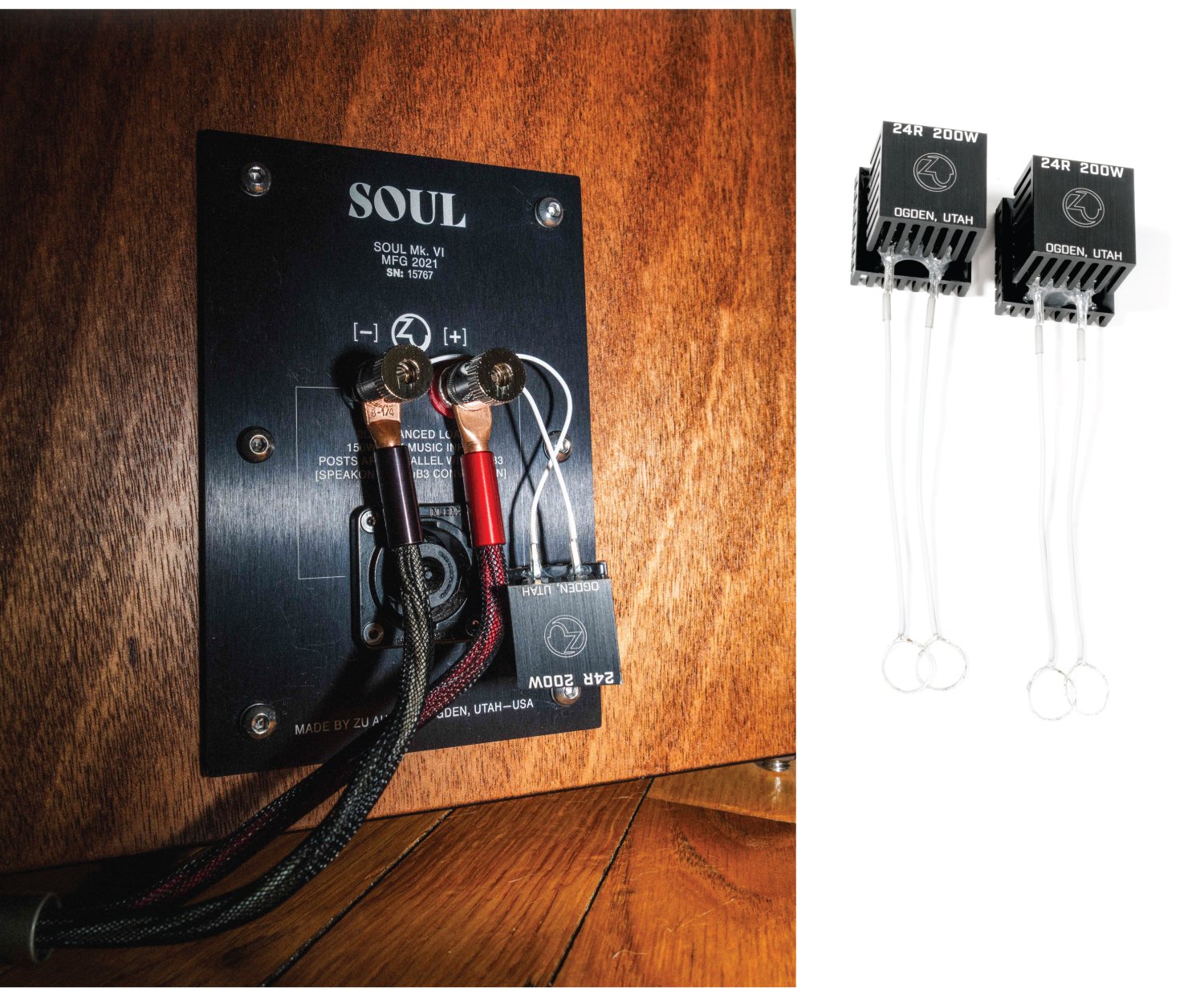
A loudspeaker loading resistor reduces the electrical impedance (unit: ohms), and the reactive differential, presented to the connected amplifier. It connects to the back of the speaker right there with the speaker cable—one lead to the red input, the other to the black.
From The Beginning….
Thirty-two ohm speakers, more or less the standard back in the early days, are much more voltage sensitive and less current hungry. Common modern loudspeakers are much more current hungry and fall into the specification of eight, six, four and even two ohm rating. The higher the ohm spec’ for a loudspeaker the less current hungry they are; and the lower the ohm spec’ the more current hungry they are. Electrical impedance is after all the ratio of voltage over current. Low impedance loudspeakers present a “heavier” or “stiffer” load to the amp. Higher impedance speakers present a lighter load and are more voltage sensitive.
Your amp has a name and its Goldilocks.
Some amplifiers respond favorably to current hungry speakers, some don’t. If your amplifier is known to perform best with an eight, six, four or even two ohm load, and you have a twelve or sixteen ohm speaker, you can connect up a loading resistor to the back of the speaker. Doing so will combine to present a heavier load to the amp thus allowing the amplifier to operate within its goldilocks zone.
Presenting the right environment to those puckish electrodynamics creatures known as kilowiggles* is near impossible without a bit of snubbing.
Loading resistors for speakers are not a common tweak, but they are worth the effort for those looking for the Big Note**. Generally, they are not necessary for getting great sound, particularly if you know how your chosen amp matches up with the selected loudspeaker. But even with well matched off-the-shelf kit, loading resistors can help tune the amp/speaker matchup.
Here’s a link for more information and purchase.
* Kilowiggles | kilə,wiɡ(ə)l | is a grandpa word for electricity, a pun on kilowatt. If you know this term you know about flux capacitors (yes, they are real, so is time travel) and, letting the smoke out (also a thing). Hell, know these and my bet is you also know about blinker fluid and muffler bearings. Please don’t ask me what tolerance you need on those bearings or how tight to toque them.
** Big Note, Zappa Speak, and different than Pete Townsend’s One Note. Sure, things have frequency and since acoustics-as-foundational thinking is groovy, even far out, loosely correlating vibrational energy (-heat-) to sound can be fun. But please, no quantum mysticism implied or expressed. Shit, is Frank responsible for popularizing this nonsense? Or, maybe the Big Note is expressed in Lumpy Gravy for a reason?! Tough to say. Either way, his music is mostly brilliant. Pete’s too (says the stooge listening to Fried from Cope and buying tickets to The Tear Garden. GET YOUR TICKETS.