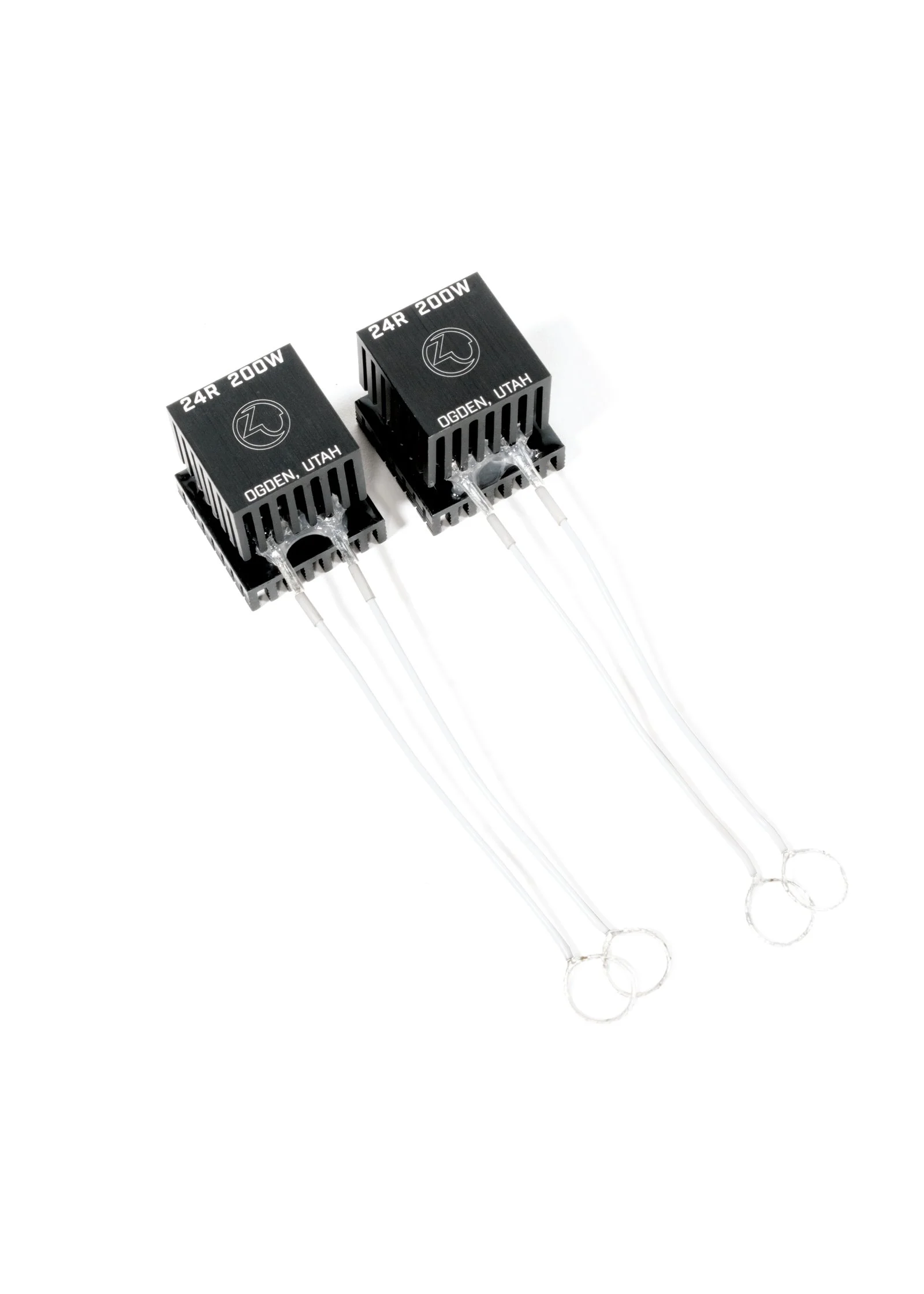
Speaker Loading Resistor

Sale Price: $50.00 Original Price: $65.00

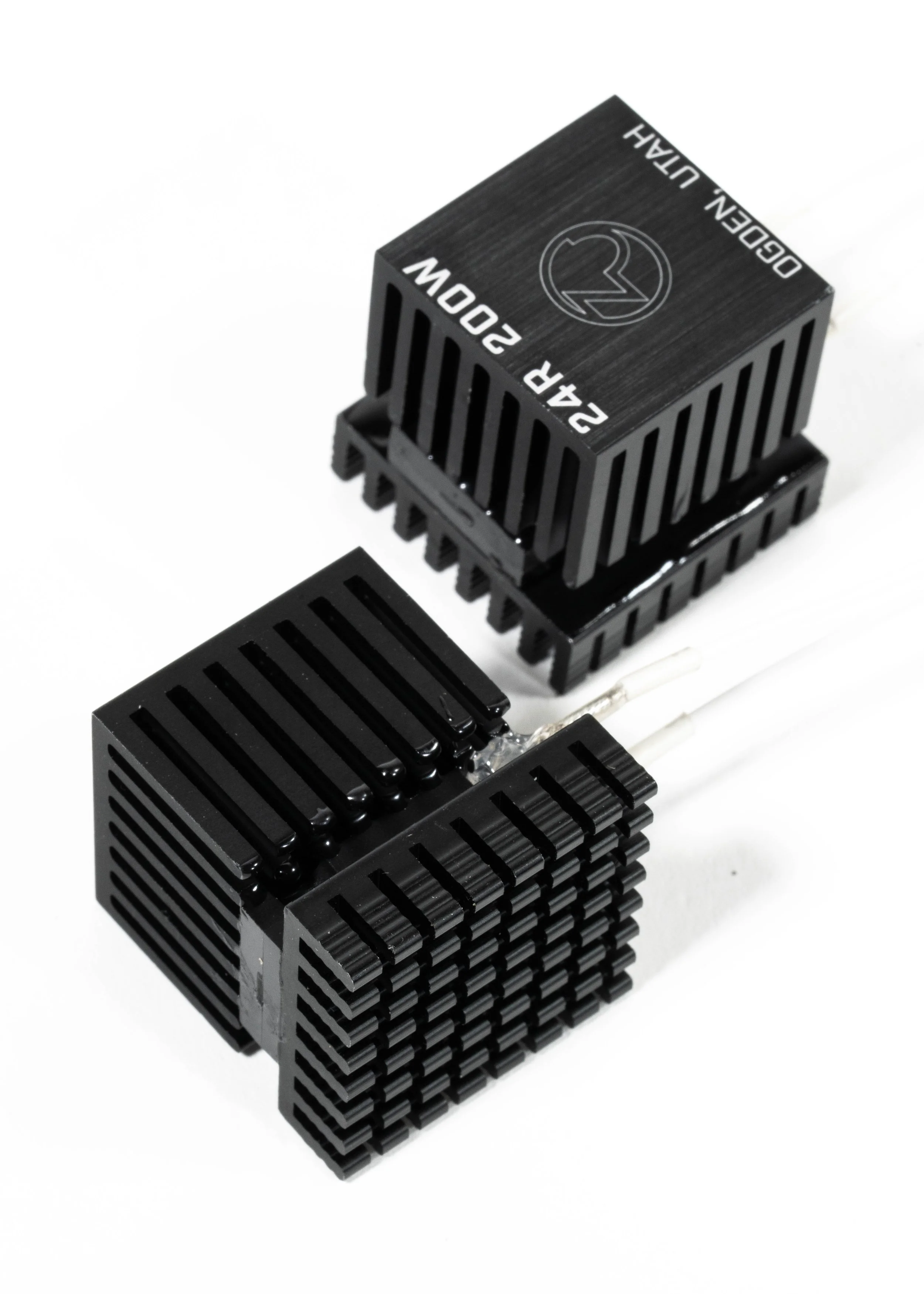
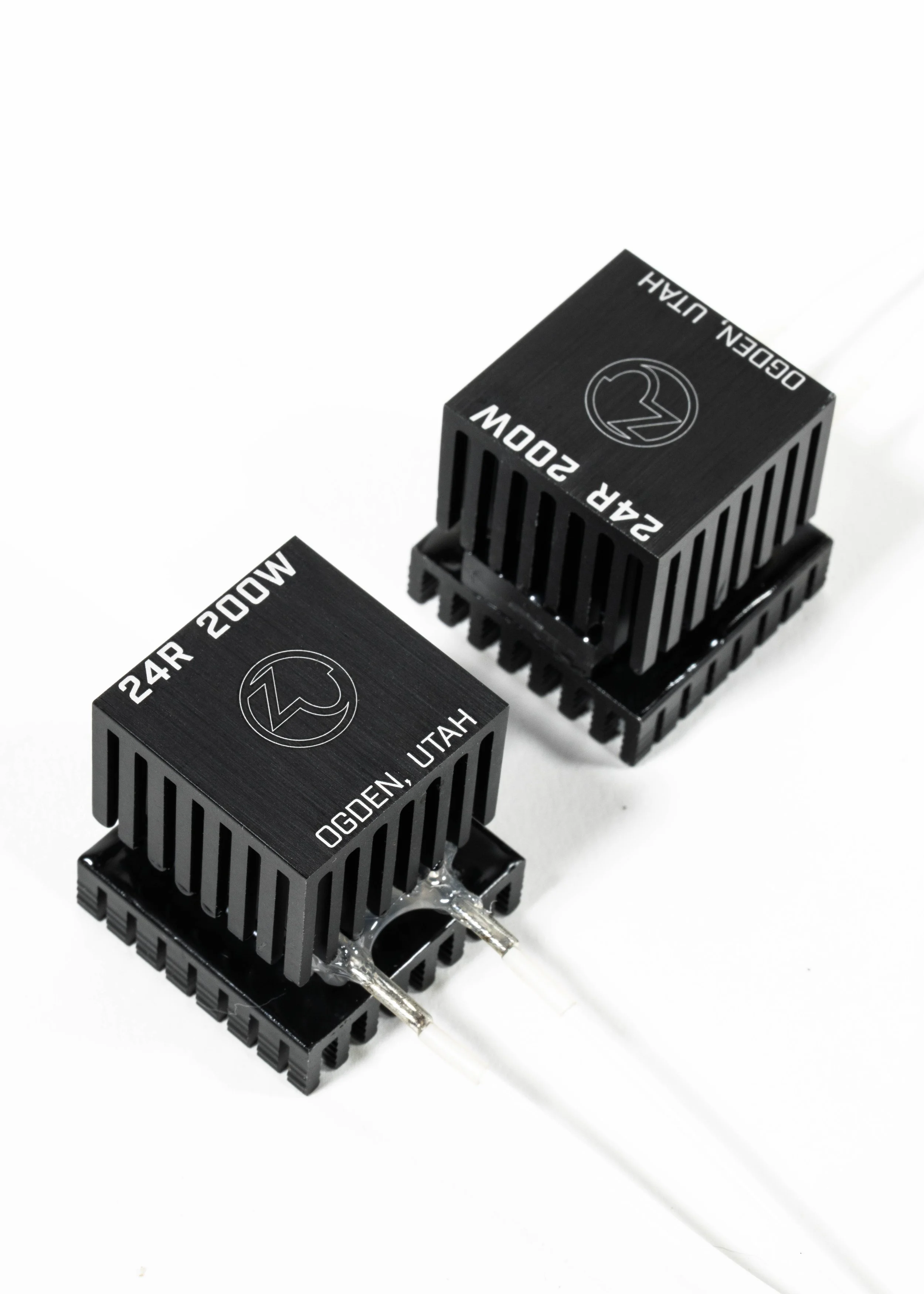
NOTE - Photo does not match what you are purchasing. NEW VERSON IS SHIPPING. New photos to be published July 8th. All orders are for the new version. The old 25W version is discontinued. New version use thin-film metallization technology and are rated for up to 250W program. Thin-film chips are made using vacuum deposition to create an ultra-precise, stable layer while thick film resistors use screen-printing. This translates into a snubbing network with the lowest possible system noise and an extremely wide operational bandwidth.

Price is for a single loudspeaker loading resistor (snubber). For a matched pair, one for your left speaker, another for your right, please order two.

Sale price will expire July 8th when photos and user guide are published.

Most will find success with the 25 ohm value, but this depends on amplifier “happiness” with a given impedance load. Results generally vary dramatically between amps. Some amps and systems really benefit from these loading resistors, some don’t.

What do these things do? They reduce the impedance, the ohms measure, of speakers and reduce the reactive differential. Many solid-state amps are designed for, and may preform better with a stiffer load (lower ohm measure). This is not always the case, many amps preform better with a lighter load (higher ohm specification like 16 ohms) especially vintage amps and tube amps that are build around and optimized for say a 16 ohm speaker. Just because your amp has an 8 ohm rating doesn’t mean it sounds best with an 8 ohm load (8 ohm speakers), but it might. You kinda half to try and see.

Like everything we sell, these have 60-day money back guarantee and we pay return shipping.

There is no directionality on these, just connect between your speaker’s binding post.

There is no burn-in —you can start testing right out of the box.

[NOTE, older 25W units will get hot if you listen to your Zu speakers at live-levels, please read the user manual here. New versions will only get warm to the touch.]

R Value:

NOTE - Photo does not match what you are purchasing. NEW VERSON IS SHIPPING. New photos to be published July 8th. All orders are for the new version. The old 25W version is discontinued. New version use thin-film metallization technology and are rated for up to 250W program. Thin-film chips are made using vacuum deposition to create an ultra-precise, stable layer while thick film resistors use screen-printing. This translates into a snubbing network with the lowest possible system noise and an extremely wide operational bandwidth.

Price is for a single loudspeaker loading resistor (snubber). For a matched pair, one for your left speaker, another for your right, please order two.

Sale price will expire July 8th when photos and user guide are published.

Most will find success with the 25 ohm value, but this depends on amplifier “happiness” with a given impedance load. Results generally vary dramatically between amps. Some amps and systems really benefit from these loading resistors, some don’t.

What do these things do? They reduce the impedance, the ohms measure, of speakers and reduce the reactive differential. Many solid-state amps are designed for, and may preform better with a stiffer load (lower ohm measure). This is not always the case, many amps preform better with a lighter load (higher ohm specification like 16 ohms) especially vintage amps and tube amps that are build around and optimized for say a 16 ohm speaker. Just because your amp has an 8 ohm rating doesn’t mean it sounds best with an 8 ohm load (8 ohm speakers), but it might. You kinda half to try and see.

Like everything we sell, these have 60-day money back guarantee and we pay return shipping.

There is no directionality on these, just connect between your speaker’s binding post.

There is no burn-in —you can start testing right out of the box.

[NOTE, older 25W units will get hot if you listen to your Zu speakers at live-levels, please read the user manual here. New versions will only get warm to the touch.]

Some amps are designed for and sound best with easy to drive 16 ohm loudspeakers, others have a load sweet spot of 8 ohms, and still others 4 ohms. Also a factor on matchup is how an amp tolerates the reactive influences within the loudspeaker. A purely resistive loudspeaker would have a flatline impedance curve—8 ohm speaker would measure 8 ohms at every frequency point throughout its bandwidth.

If your amplifier sounds better with a heavier (stiffer), less reactive load, here’s an easy plug and play solution for such matchups.

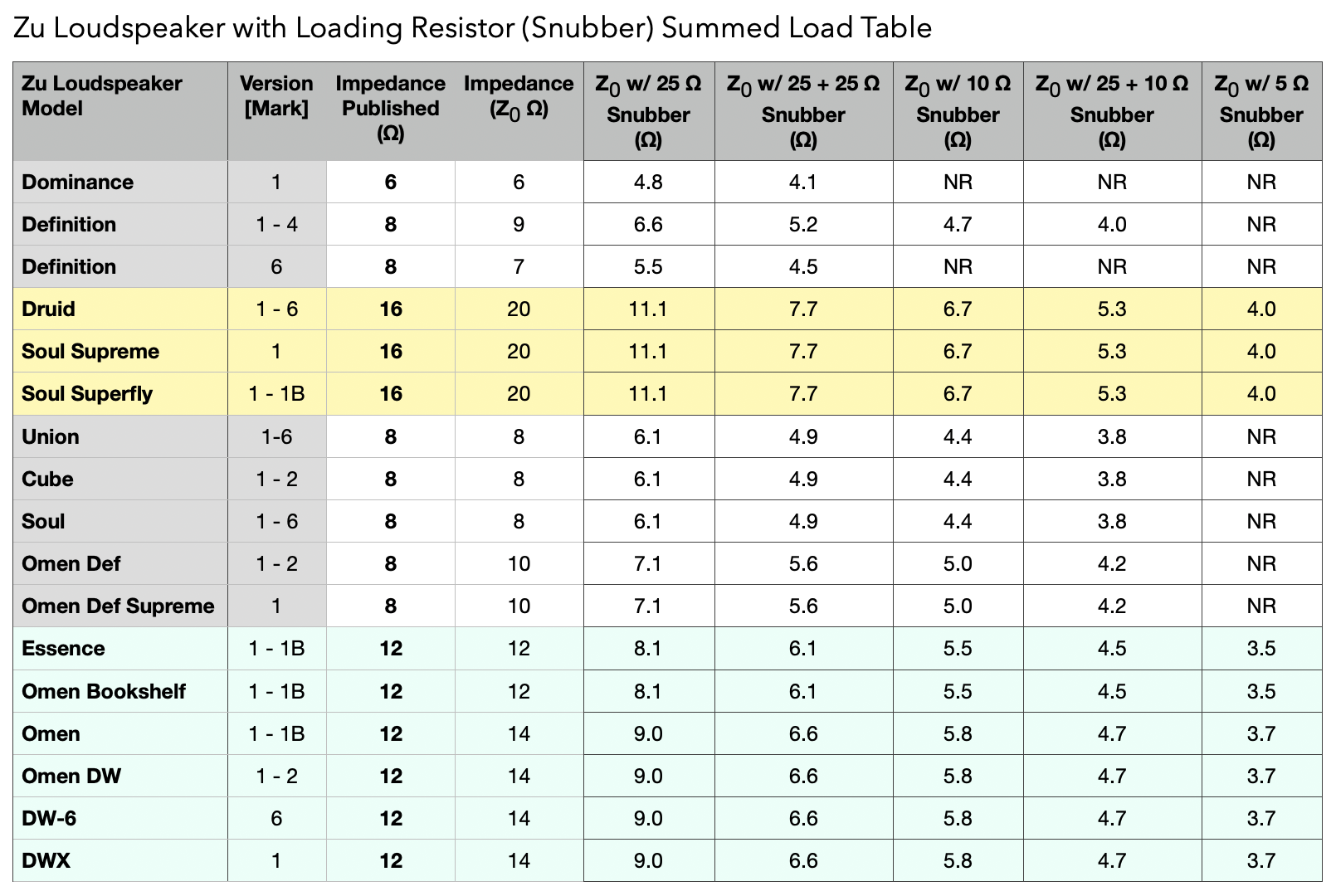
  • Reduce the nominal Z-weighted impedance of Zu DW-6, DWX, Druid, Soul Supreme, Soul Superfly, Omen and Omen DW to about 8 ohms. See curves in.

  • Reduces the z-weighted dynamic impedance ratio from 5:1 to 3:1

  • Matched tolerance is equal to or better than 0.5%

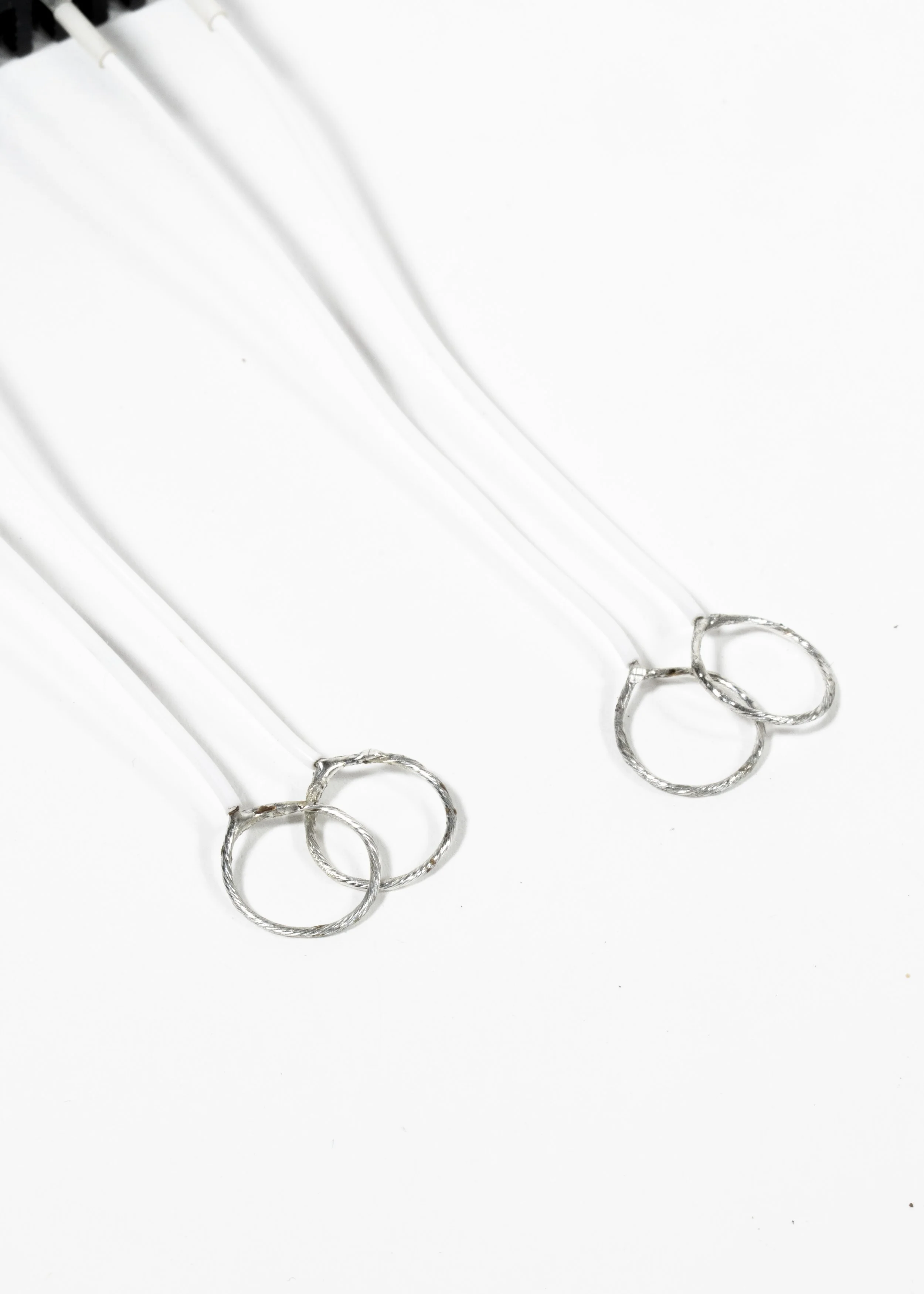
  • Snubbers are used to better match the loudspeaker’s load impedance to an amplifiers output impedance. The Zu/Ohmite 25 ohm, 25 watt loudspeaker loading resistors (snubbers) feature pre-formed leads to easily connected up to your Zu loudspeakers—parallel between the red and black binding posts.

These snubbers should be used under the following conditions, and connected thus:

Loading resistors (snubbers) are intended for home audio hi-fi use. They are designed to safely dissipate up to 100 watts of power into the resistor. This typucally translates into 250 watts RMS of powered shared between speaker and snubber. Using a Zu 12 ohm speakers like Omen and DWX, that means you can supply roughly 250 watts RMS of power from your amplifier into your loudspeaker with a 25 ohm snubber installed. This amount of power into Zu loudspeakers is concert levels and your neighbors will protest, or gather for the party.

Connect the snubbers in parallel with the red and black binding posts on your Zu 12 ohm or 16 ohm loudspeakers—one end of the resistor will go the red post, the other end of the same resistor will go to the black post. It makes no difference which end goes to which end.

Yes, you can stack them, the new mark-two design allows for easy stacking for say two 25 ohm values to give you a snubber value of about 12 ohms. If you are stacking two together, we recommend you place one oreinted up, and the other down, so they don’t hit each other. And you also want to stand them off the speaker a bit, so their is an air gap between speaker and snubber assembly, so they don’t vibrate against the cabinet.

Snubber will get warm to the touch at loud listening levels and conditions, but not hot. At normal listing levels the snubber will opearte at just a few degrees above ambient temperature. Normal levels and conditions are in-home use, at 70º F [21º C], listening at about 10 feet from the loudspeaker plane and getting a sound pressure level at or less than 75 dBC-slow.

Here’s what the loading resister will do to the impedance curve of your Druid, Soul Supreme or Soul Superfly:

[Loading resistor is based on the Ohmite P/N: B20J25RE]